
Change text size Plus Minus

Procedures

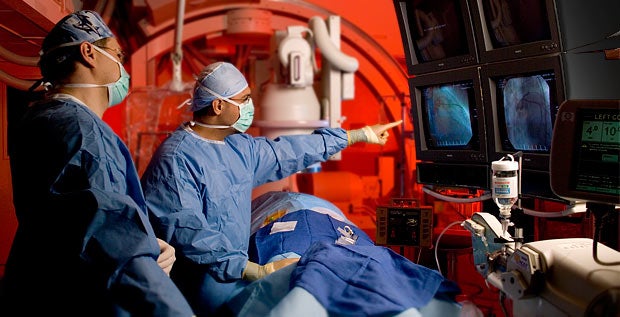
Oklahoma Heart Institute Cardiac Catheter Procedure

Oklahoma Heart Institute (OHI) is one of the state’s largest hospitals dedicated exclusively to the prevention, diagnosis and treatment of heart disease. Recognized by Blue Cross Blue Shield as Northeast Oklahoma’s only “Blue Distinction” center for cardiac care, OHI is also one of only five heart hospitals nationwide participating in a cash-back program for Medicare patients who qualify.


Cardiac Catheterization

Cardiac catheterization is a common – yet potentially lifesaving – procedure that is performed to diagnose and treat blocked arteries. A narrow tube called a catheter is inserted into the artery through a vein in the leg and threaded upwards to the heart. Using a special x-ray camera called a fluoroscope and radiopaque dye, which shows how blood passes through the heart and surrounding vessels, doctors can see fat and calcium deposits (plaque) that may be blocking circulation. While cardiac catheterization is helpful in determining whether a person needs bypass surgery, doctors can sometimes clear the blockage during the procedure using balloon angioplasty or stenting.


Cardiac Stenting

When the arteries leading to the heart become blocked with cholesterol or other substances, blood flow to the heart is limited – often resulting in chest pain and even a heart attack. This blockage often can be reduced using one of the following non-surgical techniques:

Balloon angioplasty uses a long, thin flexible tube called a catheter to reach the affected areas of the heart. Once in place, a balloon attached to the end of the catheter is inflated, flattening the blockage against the artery wall and improving blood flow. The balloon is then deflated and removed. Patients are lightly sedated during the procedure and most are discharged from the hospital within 24 hours or less.

Coronary stenting involves the use of a small, mesh-like tube to open blockages in the arteries and prevent them from narrowing again. The stent is placed on a balloon-tipped catheter and inserted into the body – usually through the groin – and moved until it reaches the affected area of the heart. When the balloon is inflated the stent locks into place and forms a scaffold to prop the artery open. This allows improved blood flow to and from the heart. Within a few weeks of the procedure, the inside lining of the artery grows over the stent’s metal surface. Stents are sometimes coated with a medication that slowly releases into the bloodstream to help prevent the vessel from reclosing.


Peripheral Interventions

Like the arteries leading to the heart, peripheral arteries that supply blood to the head and neck, kidneys and abdomen and legs can also become blocked. Oklahoma Heart Institute offers a variety of procedures to reopen these arteries and restore blood flow.

Much like balloon angioplasty is performed to clear blockages leading to the heart, the same technique is used to repair arteries in other areas of the body. A tiny balloon affixed to the end of a catheter is inflated within the artery to open the narrowed area.

A small, mesh-like tube called a stent is sometimes placed in the artery to ensure that it remains open and prevent it from narrowing again. In some cases, the stents are coated with special medications that slowly release into the bloodstream to help prevent re-closure.


PFO/ASD Closure

Oklahoma Heart Institute is home to the first program in Tulsa to offer comprehensive adult cardiac interventional services including non-surgical closure of patent foramen ovale (PFO) and atrial septal defect (ASD) to repair these potentially life-threatening heart defects.

PFO and ASD are among the most common types of congenital heart defects. Affecting an estimated 10 to 15 percent of the population, PFO is the result of an incomplete closure of tissue between the two upper chambers of the heart, which normally occurs at birth.

Most people with PFO have no side effects. However in some people – especially those with other heart problems – blood clots can travel through a small, flap-like opening and into the brain, causing a stroke or TIA (transient ischemic attack or “mini-stroke”) or heart attack.

Similar to PFO, ASD is a defect in which a hole in the wall between the two top chambers of the heart causes oxygenated blood to leak from the heart’s left side back to the right side. The blood is then pumped back into the lungs, displacing blood that needs oxygen and causing the body to work harder to maintain circulation. While those with small atrial defects may never experience symptoms or complications, those with larger defects are at greater risk for heart failure, arrhythmias or stroke.

In the past, open heart surgery or a lifetime of dependence on blood thinning medication were the only known treatments for PFO and ASD. Today, Wayne Leimbach, MD, a cardiologist with Oklahoma Heart Institute, is able to offer a revolutionary, non-surgical procedure to correct these defects in adults.

Performed in the cardiac catheterization lab, the procedure usually requires a one-night hospital stay. Patients typically experience few complications and can resume normal daily activities within a week. Dr. Leimbach has successfully performed this non-surgical procedure for many years. In fact, no one in the state has higher success rates.


Electrophysiology

Electrophysiology provides evaluation, diagnosis and therapy for conditions such as atrial fibrillation, heart arrhythmias, sudden cardiac arrest and congestive heart failure. During an electrophysiology (EP) study an electrode catheter is inserted into a blood vessel in the leg and/or neck and threaded to the heart. Once the catheter reaches the heart, electrodes gather data and a variety of electrical measurements are made. This test is used to determine if there are any abnormalities and, in some cases, can be used to treat or correct certain conditions.


Atrial Fibrillation Treatments

More than 2 million Americans suffer from atrial fibrillation, or AFib, an abnormal heart rhythm that makes it difficult to efficiently pump blood throughout the body. Atrial fibrillation often causes fatigue, dizziness and breathing difficulties and can lead to more serious conditions including congestive heart failure and stroke.

Until recently, an open-heart surgical procedure was the only alternative for people unable to control the condition with medication or a pacemaker. Today, Oklahoma Heart Institute’s Advanced Center for Atrial Fibrillation is proud to offer a variety of options, including minimally-invasive and non-surgical alternatives to treat this common condition.

Comprehensive Treatment for Atrial Fibrillation

Oklahoma Heart Institute is the only hospital in Tulsa offering comprehensive treatment options for atrial fibrillation including non-surgical and minimally-invasive procedures.


Ablation Procedures

Oklahoma Heart Institute’s Advanced Center for Atrial Fibrillation offers multiple procedures that may eliminate A-Fib. As with any surgery, there are risks involved. Oklahoma Heart Institute physicians will explain the risks and advantages of each procedure and discuss what might be right for you.

Catheter Ablation

Catheter ablation is an effort to remove the principal cause of a patient’s A-Fib. In this procedure, a small catheter is inserted through a vein in the groin and threaded up to the heart where it makes a small hole to access the inner heart.

If the heart is beating erratically and too quickly, the electrodes at the end of the catheter can help the cardiologist locate the faulty electrical sites. These sites are then scarred (or ablated) with hot or cold energy. The scars block the primary electrical impulses responsible for A-Fib. The success rate for curing A-Fib with catheter ablation varies and sometimes there is still a need for patients to take anticoagulants. If necessary, your physician may suggest the procedure be repeated. The procedure can take up to six hours to perform. Typically, two to three nights of hospital stay are required.

Open-Chest Surgical Ablation

More than 35,000 patients have opted for this procedure. Frequently referred to as the Maze, this procedure has a high success rate for a broad range of A-Fib patients – including chronic A-Fib patients. However, while open-chest surgical ablation can cure A-Fib, this highly-invasive procedure calls for open-heart surgery and generally includes heart-lung bypass.

If surgery is already being considered for other reasons such as a valve repair or replacement, your doctor may recommend this option. It only takes an extra 15 to 25 minutes to create the necessary ablations to block the abnormal electrical impulses that cause A-Fib.

In addition, many surgeons will close or remove the left atrial appendage (a small flap on the heart) that is thought to be the primary location where blood clots form during A-Fib, which could lead to a stroke.

Minimally-Invasive Surgical Ablation

Frequently referred to as the Mini-Maze, this recently developed procedure is minimally-invasive. This procedure is similar to the open-chest ablation but differs in that the surgeon gains access to the heart by way of three small incisions on each side of the chest.

This approach generally takes two to four hours. As in the open-chest procedure, the cardiovascular surgeon uses hot or cold energy to make precise ablations within certain areas of the heart to stop the abnormal A-Fib-causing electrical impulses. Many surgeons may also remove or close the small flap on the heart where most stroke-causing blood clots occur.


Drug Therapy

Doctors often prescribe anticoagulants (blood thinners) to A-Fib patients to prevent blood clots that can result in stroke. Studies show the most commonly prescribed anticoagulant, Coumadin (warfarin), has reduced the risk of stroke by 68 percent. To reach this stage of defense, it is imperative to maintain the proper amount of Coumadin in the blood stream since too little can lead to clots and too much can lead to severe bleeding. A-Fib patients should follow their doctor’s instructions closely and monitor their blood levels regularly because many drugs, dietary supplements and foods can negatively influence blood levels.


Pacemakers

A pacemaker is a small, battery-operated device that helps control an abnormal heart rhythm, which is sometimes called arrhythmia or dysrhythmia. Some pacemakers are permanent (internal) and are implanted under the skin of the chest or abdomen while others are temporary (external) This device uses electrical pulses to “pace” the heart or prompt it to beat at a normal rate, which can relieve common symptoms such as fatigue and fainting. Most pacemakers are designed to detect the amount of activity a patient is doing and adjust the heart rate appropriately.

Similarly, implantable cardioverter defibrillators (ICDs) are used to monitor heart rate and rhythm in people who have had a heart attack or are at high risk for sudden cardiac death. Once implanted in the chest, the ICD is programmed to detect abnormal electrical activity in the heart and deliver a potentially life-saving shock if a dangerous rhythm is detected. While pacemakers and ICDs are similar, pacemakers only pace the heart while ICDs can also deliver shock therapy.

The physicians of Oklahoma Heart Institute are experienced at pacemaker and ICD implantation and maintenance. Each device is carefully chosen to ensure its specific features are tailored to the patient’s needs. In fact, many of our patients have received the very first implants of their kind in the world, providing them with the latest and most advanced technology available. Oklahoma Heart Institute’s Dysrhythmia and Pacemaker Clinic provides regular follow-up evaluations and care to ensure the devices function normally.


Vascular Surgery

Traditional Bypass Surgery

Oklahoma Heart Institute is a leader in Coronary Artery Bypass Surgery (CABG). Often known simply as bypass surgery, this procedure is used to improve and, in some cases, restore blood flow to the heart muscle after a blockage has developed. Arteries from the chest and veins from the leg are used to bypass the blockages. While CABG is one of the most common procedures performed at Oklahoma Heart Institute, our surgical team approaches each case with uncommon expertise and care.

A Pioneering New Device

Continuing a long tradition of bringing the latest advances in cardiac care to Tulsa, Oklahoma Heart Institute is among the first hospitals in the nation to utilize a new technology that makes recovery from open heart surgery safer and less painful.

Co-developed by Oklahoma Heart Institute cardiovascular surgeon James Spann, M.D., the Rapid Sternal Closure Talon System creates a more stable closure of the chest following cardiac surgery and results in less post-operative bleeding and improved recovery time.

Valve Surgery

With hundreds of years of combined experience, the cardiovascular surgeons at Oklahoma Heart Institute are highly skilled in heart valve repair and replacement. Offering both traditional and minimally-invasive surgical alternatives, they have treated thousands of patients experiencing valve problems including congenital disorders, stenosis (narrowing of a valve), infection and regurgitation (leaking of a valve).

Valve surgery is often necessary when one or more of the heart’s four major valves that regulate the flow of blood do not work properly. The procedure allows surgeons to repair the valve or replace it with one made of animal material or metal.

During traditional valve surgery, the patient is placed on a heart and lung machine while the chest is opened and the heart is stopped, allowing surgeons to repair or replace the damaged valve.

MAZE Procedure

In addition to lifesaving surgeries, Oklahoma Heart Institute also offers many procedures designed to enhance patients’ quality of life. The MAZE procedure, which is used to treat atrial fibrillation, can eliminate debilitating symptoms such as fatigue, dizziness, and shortness of breath while reducing the risk of stroke. During the MAZE, a scope is used to make small incisions that allow access to the heart and disrupt the abnormal electrical impulses that cause A-Fib. This minimally invasive procedure is available to patients who meet the criteria and can reduce recovery time.

AAA Repair

Oklahoma Heart Institute is proud to offer endovascular graft surgery, a minimally-invasive procedure to repair abdominal aortic aneurysms (AAA). Often symptomless, AAA occurs when a worn section of the aorta becomes permanently dilated. If left untreated, the aneurysm can rupture with deadly results.

In the past, major abdominal surgery was the only alternative for patients diagnosed with AAA. Today, surgeons at Oklahoma Heart Institute can repair AAA using a minimally invasive technique that requires a shorter hospital stay and often results in fewer complications.

News

Hidden Salt

You may have thought foods like chips and pretzels were some of the...

Locations

Events

New Advances in 2012 for Atrial Fibrillation
Join us for a FREE seminar with Dr. Gregory Cogert Tuesday, March 6, 2012...
© Oklahoma Heart Institute   |   Tulsa, OK   |   918-574-9000

   Oklahoma Heart Institute on Facebook  Oklahoma Heart Institute on Twitter  Oklahoma Heart Institute on YouTube  Oklahoma Heart Institute on Google+